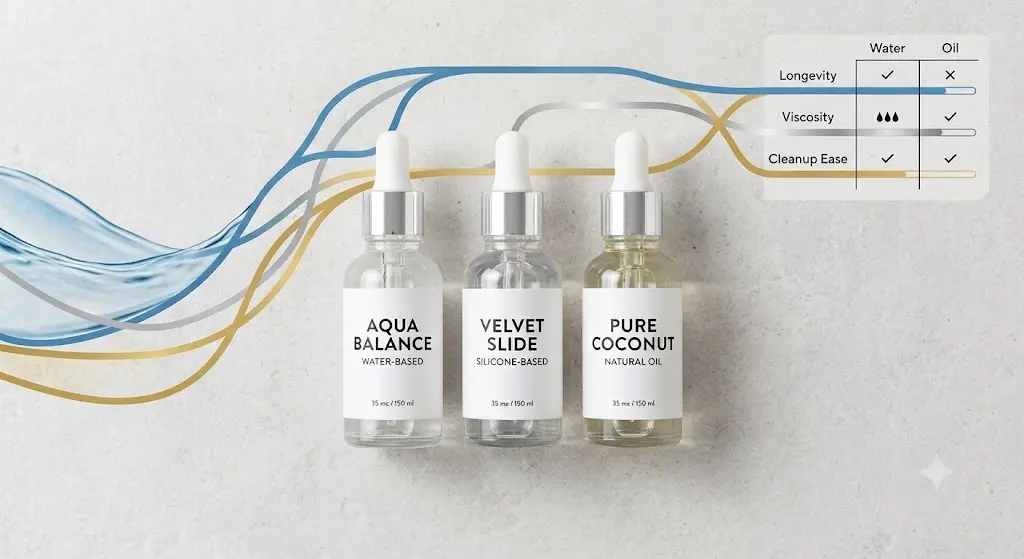
Introduction
Choosing the right lubricant is one of the easiest ways to instantly improve comfort and pleasure during intimacy. However, the sheer number of options—water-based, silicone-based, and oil-based—can be overwhelming. The most important choice you make isn’t just about texture; it’s about safety and product compatibility. Using the wrong lube with the wrong condom or accessory can lead to product failure.
1. Water-Based Lubricants
Best For: Everyday use, all condoms, and all sex toys.
The Breakdown: This is the most versatile and popular option. They are generally non-staining, easy to clean up, and match the body’s natural pH well. They are safe to use with all types of condoms (latex, polyisoprene, polyurethane).
Compatibility: Condom Safe? YES | Toy Safe? YES.
Consideration: They tend to dry out faster than other options and may require reapplication.
2. Silicone-Based Lubricants
Best For: Long-lasting moisture, water play (shower/bath), and sensitive skin.
The Breakdown: Silicone lubes offer a incredibly slick, velvety feel. A small amount lasts a long time and they do not dry out, even underwater. They are generally hypoallergenic. They are safe to use with latex and polyisoprene condoms.
Compatibility: Condom Safe? YES (Most) | Toy Safe? NO.
Consideration: They will degrade silicone sex toys over time, turning the surface gummy. They require soap and water to wash off completely.
3. Oil-Based Lubricants
Best For: Massage that leads to intimacy, but generally not intercourse involving protection.
The Breakdown: Oil lubes (including natural oils like coconut oil or petroleum-based gels) offer great glide.
Compatibility: Condom Safe? NO (with Latex/Polyisoprene) | Toy Safe? YES (Glass/Metal).
The Major Danger: Oil-based lubricants MUST NEVER be used with latex condoms. The oil breaks down the latex structure almost immediately, causing microscopic tears and significantly increasing the risk of condom failure (breakage or slippage).